Using AI in primary healthcare - empowering local doctors/physicians with AI tools to improve better diagnosis and prognosis at the patient's location - ezeehealth.in
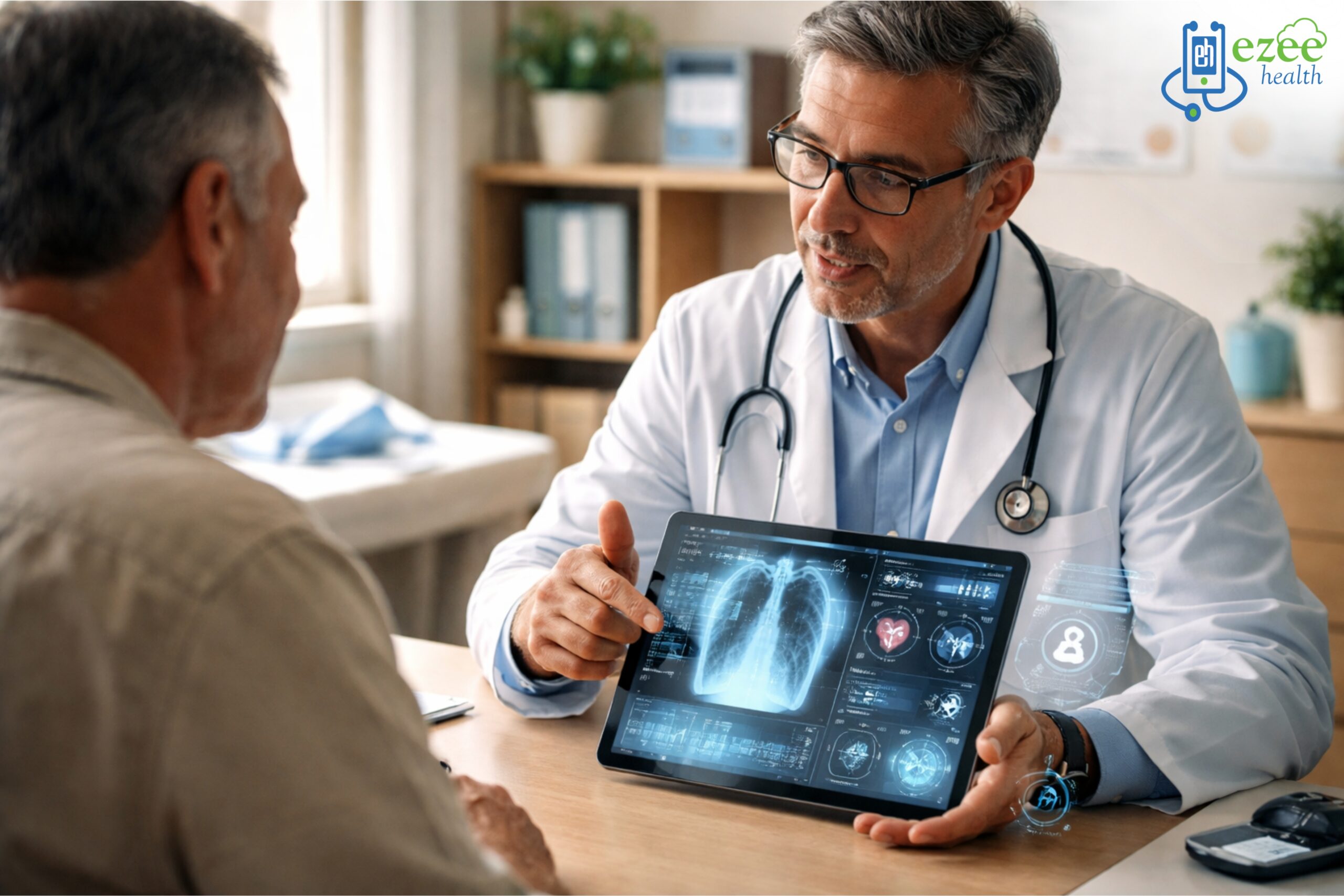
Today in India, the first point of contact for most patients is not a specialist, but the local doctor – the Neighbourhood clinic, a small-town physician, or the doctor sitting at a Primary Health Centre (PHC) in your locality.
This is exactly where the most critical decisions are made: “Is this just a simple fever or something serious?”, “Should I treat here or refer immediately?” Heard it right?
The challenge is that these doctors often work with limited diagnostics, limited time, and little direct specialist support but the expectations from patients and families are extremely high. This is where AI-enabled tools are quietly revolutionizing primary healthcare: making diagnosis more accurate, prognosis more data-driven, and clinical decisions more confident – right at the patient’s location.
Ezeehealth’s vision is simple: AI should not replace doctors, it should reinforce them so that every local doctor has “supercharged clinical judgement” without needing to send every case to a big city hospital.
𝐖𝐡𝐲 𝐢𝐬 𝐀𝐈 𝐢𝐧 𝐩𝐫𝐢𝐦𝐚𝐫𝐲 𝐡𝐞𝐚𝐥𝐭𝐡𝐜𝐚𝐫𝐞 𝐢𝐬 𝐧𝐨 𝐥𝐨𝐧𝐠𝐞𝐫 𝐨𝐩𝐭𝐢𝐨𝐧𝐚𝐥? 𝐋𝐞𝐭’𝐬 𝐜𝐫𝐚𝐜𝐤 𝐢𝐭.
Across global healthcare systems, one trend is very clear:
By 2030, there is an expected shortfall of around 18 million healthcare professionals worldwide, including roughly 5 million doctors. Primary care is being asked to manage more patients, more complex chronic diseases, and rising expectations often with the same or even fewer resources.
In this reality, AI is not a fancy add‑on but a force multiplier that analyses symptoms, vitals, and history for risk stratification, interprets X-rays and fundus scans quickly and accurately, and predicts patient trajectories early enough for timely intervention.
In simpler terms: When a doctor is asking, “Should I admit this patient now or is home monitoring safe?”, AI acts like a second brain that supports that decision.
𝐇𝐨𝐰 𝐀𝐈 𝐩𝐫𝐚𝐜𝐭𝐢𝐜𝐚𝐥𝐥𝐲 𝐞𝐦𝐩𝐨𝐰𝐞𝐫𝐬 𝐥𝐨𝐜𝐚𝐥 𝐝𝐨𝐜𝐭𝐨𝐫𝐬
𝟏. 𝐁𝐞𝐭𝐭𝐞𝐫 𝐝𝐢𝐚𝐠𝐧𝐨𝐬𝐢𝐬 𝐚𝐭 𝐭𝐡𝐞 𝐟𝐢𝐫𝐬𝐭 𝐭𝐨𝐮𝐜𝐡𝐩𝐨𝐢𝐧𝐭
Research shows that AI algorithms in image-based diagnosis can often achieve specialist-level performance detecting pneumonia from chest X-rays, classifying skin lesions, or spotting diabetic retinopathy.
In a primary care setting, this translates into:
● Taking a retinal image using a smartphone or basic device and screening for diabetic retinopathy with AI.
● Using lung sounds and vitals to flag risk of tuberculosis or sepsis.
● Combining ECG data with heart sounds to detect early cardiac issues even before obvious symptoms appear.
The earlier the disease is detected, the fewer the complications, the lower the cost, and the better the quality of life and all of this can start from the local clinic itself.
𝟐. 𝐒𝐦𝐚𝐫𝐭𝐞𝐫 𝐩𝐫𝐨𝐠𝐧𝐨𝐬𝐢𝐬 𝐚𝐧𝐝 𝐫𝐢𝐬𝐤 𝐩𝐫𝐞𝐝𝐢𝐜𝐭𝐢𝐨𝐧
After diagnosis, the next big question is always: “What happens next? Here, AI can:
● Combine multi-year medical records, vitals, lab results, and lifestyle data to predict disease progression.
● Flag high-risk cohorts – for example, which diabetic patients are at higher risk of retinopathy, or which cardiac patients have a higher chance of readmission.
● Give the doctor clear signals on which patients need aggressive follow-up and which can be safely managed through remote monitoring.
This leads to:
● Fewer unnecessary referrals.
● Deeper focus on genuinely high-risk patients.
● Smarter utilization of scarce resources in resource-limited settings.
𝟑. 𝐑𝐞𝐝𝐮𝐜𝐢𝐧𝐠 𝐛𝐮𝐫𝐝𝐞𝐧, 𝐢𝐧𝐜𝐫𝐞𝐚𝐬𝐢𝐧𝐠 𝐫𝐞𝐚𝐥 “𝐟𝐚𝐜𝐞 𝐭𝐢𝐦𝐞” 𝐰𝐢𝐭𝐡 𝐩𝐚𝐭𝐢𝐞𝐧𝐭𝐬
AI is not just about diagnosis and prognosis – it can also take over many repetitive, low-value tasks:
● Auto-generating clinical notes and documentation.
● Handling basic triage questions through AI-based chatbots.
● Automating follow-up reminders, lifestyle nudges, and remote vital monitoring.
The result: local doctors spend less time glued to screens and more time in real conversation with patients – preserving the human touch that makes healthcare truly humane.
𝐄𝐳𝐞𝐞𝐡𝐞𝐚𝐥𝐭𝐡’𝐬 𝐯𝐢𝐬𝐢𝐨𝐧: 𝐀𝐈 𝐭𝐡𝐚𝐭 𝐭𝐫𝐚𝐯𝐞𝐥𝐬 𝐭𝐨 𝐭𝐡𝐞 𝐩𝐚𝐭𝐢𝐞𝐧𝐭, 𝐧𝐨𝐭 𝐣𝐮𝐬𝐭 𝐭𝐡𝐞 𝐡𝐨𝐬𝐩𝐢𝐭𝐚𝐥
Most advanced tools have traditionally stayed locked inside tertiary care hospitals. Ezeehealth is building in the opposite direction:
For Ezeehealth, AI means:
● Human-centred design -tools that integrate into existing clinical workflows instead of disrupting them.
● A doctor-first approach – AI can suggest, but the final decision always rests with the physician.
● Deep trust with data privacy, patient safety, and regulatory compliance is treated as non-negotiable.
The most powerful asset in healthcare is still the doctor’s empathy, experience, and understanding of context.
In this partnership:
● AI handles pattern recognition, speed, and heavy data crunching.
● The doctor gets a more complete view of the patient – enabling them to explain clearly, discuss options, and involve the patient in shared decision-making.
This pairing leads to:
● Patients feeling, “My doctor took me seriously, looked at the data, and explained everything clearly.”
● Doctors feeling, “I now have tools that were once available only in large corporate hospitals.”
This is the core belief at Ezeehealth: AI-intelligent systems plus human-intelligent doctors together create genuinely better care.
Some numbers that signal where the world is heading
● The AI in healthcare market was around 11 billion USD in 2021 and is projected to grow to roughly 187 billion USD by 2030 – showing the pace of adoption.
● A 2025 survey indicates that about two-thirds of physicians already use some form of health-AI tools, and a significant majority believe AI can have a positive impact on patient care.
● Imaging-based AI tools have demonstrated specialist-comparable accuracy in pathology, radiology, ophthalmology, and cardiology across multiple studies.
If you want AI-powered data support to sharpen your clinical judgement, make diagnosis and prognosis more objective and efficient, and still keep human, doctor-led care at the Centre, then Ezeehealth is built for you. We are currently collaborating with selected local doctors, clinic owners, and primary care physicians to pilot AI-enabled primary care pathways – especially in areas where specialist access is limited. Fill out this form, and our team will connect with you for a detailed walkthrough: