Primary Care: The First Line Against Breast Cancer
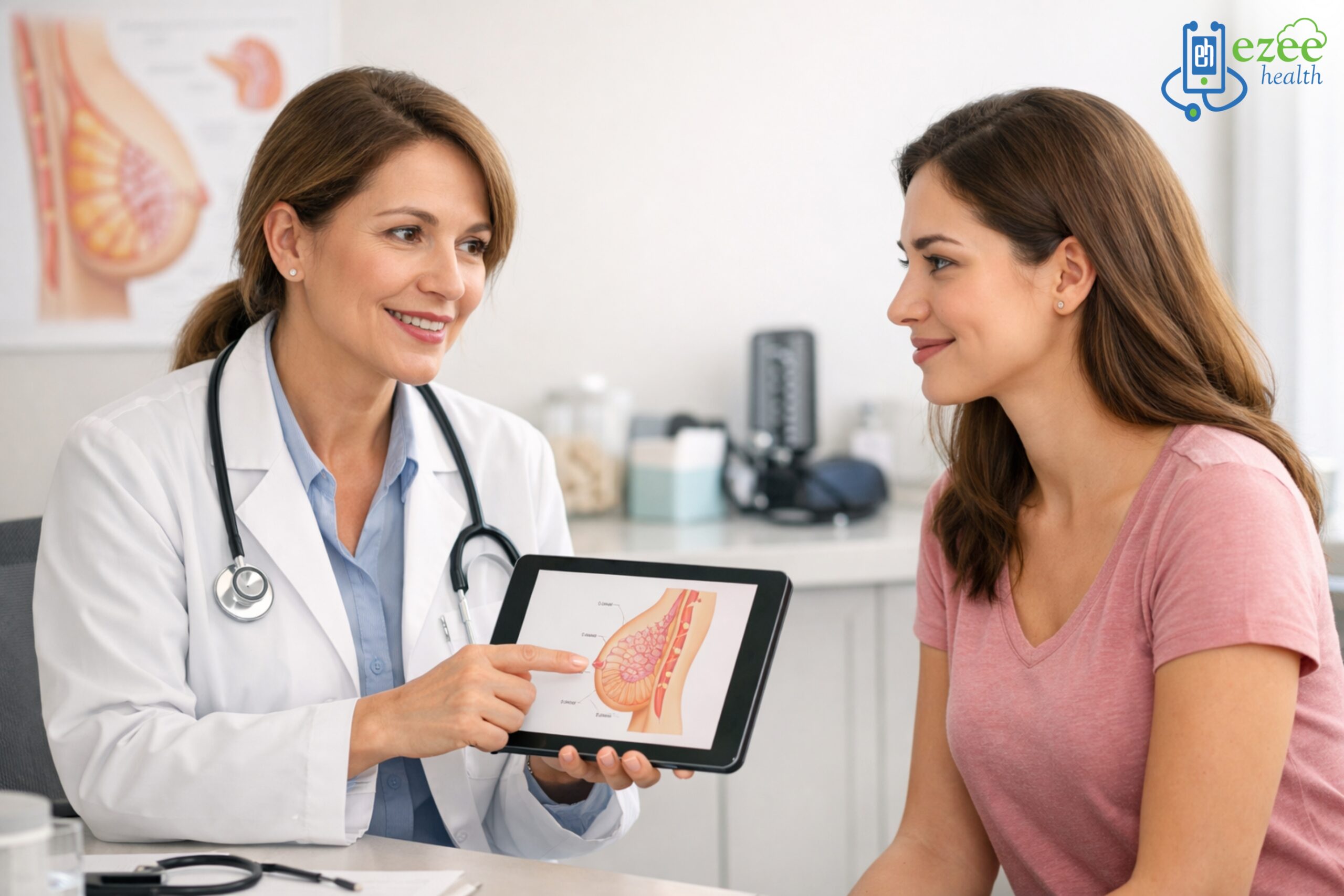
Breast cancer doesn’t start at the cancer center. It starts in a clinic, with a hurried consultation, a missed mammogram reminder, or a family history that no one has time to capture. That’s exactly where the primary physician and EzeeHealth enter the frame.
The 99% vs 31% reality
When breast cancer is found early, while still confined to the breast, the five‑year survival rate is close to 99%. Once it has spread to distant organs, that number drops to nearly 31%. In many high‑income countries, overall five‑year survival for breast cancer now crosses 90%. In India, it hovers around the mid‑60s, and in parts of Africa it can be as low as 40%. The difference isn’t biology; it’s timing who gets screened, who gets flagged, and who gets followed up.
Global initiatives like the WHO’s Global Breast Cancer Initiative are pushing countries to reduce mortality by 2.5% per year by focusing on early detection, timely diagnosis, and better treatment access. For India, where women often present later and health systems are fragmented, the frontline is not a fancy tertiary hospital. It’s the primary physician and the digital tools that support them.
The primary physician: first responder
Most women will speak to a primary doctor about vague aches, fatigue, menstrual issues, or diabetes long before they ever meet an oncologist. That first contact is where early detection really lives. A good primary physician can:
● Take a proper risk history: family history of breast/ovarian cancer, early/late menarche, childbirth patterns, hormone use, past breast biopsies.
● Translate guidelines into real life: discussing mammograms from age 40 onward (or earlier in high‑risk women), and not postponing “routine” screening year after year.
● Respecting red flags: a new lump, nipple discharge, skin dimpling, local redness, or unexplained persistent back/shoulder pain in a woman over 35 is not “let’s wait and see” it’s “let’s imagine and refer.”
● Guide the journey: from the first abnormal report to biopsy, surgery, systemic treatment and survivorship, primary care remains the one constant who understands the whole person, not just the tumor.
Data from large cohorts show that women who have regular contact with primary care are more likely to get mammograms on time, less likely to present in late stages, and have better survival. The science is clear: early detection saves lives. The system question is who makes early detection actually happen?
Where EzeeHealth makes primary care sharper
Now imagine the same overworked GP, but with an intelligent layer under every appointment. That’s where EzeeHealth comes in not as another AI enabled healthcare tech platform , but as the operating system for early detection in primary care.
Here’s how:
● Risk on autopilot Every new patient or annual visit can start with a smart pre‑consult form: family history, menstrual and reproductive history, lifestyle risks. The platform scores risk in the background and quietly flags women who need earlier or more frequent screening.
● Screening that doesn’t depend on memory Instead of expecting doctors to remember every guideline, EzeeHealth builds them into the workflow. Women 40+ can be automatically enrolled into a mammography reminder journey annual or biennial depending on your protocol. Missed appointments trigger follow‑ups instead of getting lost in a busy reception desk diary.
● Red‑flag prompts inside the consultation When the physician documents “nipple discharge”, “breast pain”, “new lump” or certain skin changes, the system can nudge: “Consider diagnostic mammogram/ultrasound + priority referral.” This doesn’t replace clinical judgement, it protects it from fatigue and forgetfulness.
● No abnormal report left behind An abnormal mammogram should never sit in an inbox. The platform can create a task: call a patient, explain a report, schedule further imaging or biopsy, confirm that the specialist appointment is booked. The loop is closed only when each step is done.
● Equity by design For India especially, the women who most need early detection are often those with the weakest access rural, low‑income, or juggling multiple chronic illnesses. EzeeHealth can show which women in your practice are overdue for screening by age, pin code, and risk, helping you reach the right people first, not just the ones who shout the loudest.
In short, primary physicians provide clinical judgment and trust; EzeeHealth provides the rails so that no woman is missed simply because the system is chaotic.
A quiet revolution in outcomes
If you zoom out, the story is simple. High‑income countries didn’t slash breast cancer mortality by magic. They did it by making an early detection routine: structured programs, reminders, tracking, and accountability. India and many other regions are now at that inflection point. The medicine is largely the same. What’s missing is consistency.
Primary physicians are already the moral center of this change. Their decisions determine whether a woman’s cancer is found at a 99% survival stage or a 31% survival stage. A platform like EzeeHealth simply makes those good decisions repeatable across thousands of women, not just a lucky few.
If you want to explore how many women in your network may be overdue for screening—and how quickly you can close that gap, share your details in the form and we’ll walk you through it.
If you’re a doctor and would like to explore how this could work in your practice, we’d love to connect. Fill out this short form and our team will reach out to you for a personalized, step‑by‑step walkthrough: